
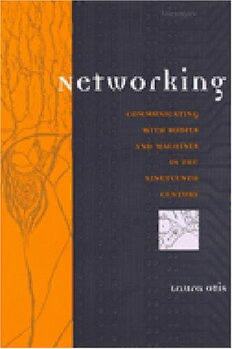
Download Networking: communicating with bodies and machines in the nineteenth century PDF Free - Full Version
Download Networking: communicating with bodies and machines in the nineteenth century by Laura Otis in PDF format completely FREE. No registration required, no payment needed. Get instant access to this valuable resource on PDFdrive.to!
About Networking: communicating with bodies and machines in the nineteenth century
This compelling interdisciplinary study investigates the scientific and cultural roots of contemporary conceptions of the network, including computer information systems, the human nervous system, and communications technology, demonstrating that the image of the network is actually centuries old. Networking places current comparisons of nerve and computer networks in perspective, exploring early analogies linking nerves and telegraphs and demonstrating how 19th-century neurobiologists, engineers, and fiction writers influenced each other’s ideas about communication.The interdisciplinary sweep of neuroscientist and literary scholar Laura Otis’s book is impressive, focusing simultaneously on literary works by such authors as George Eliot, Bram Stoker, Henry James, and Mark Twain and on the scientific and technological achievements of such pioneers as Luigi Galvani, Hermann von Helmholtz, Charles Babbage, Samuel Morse, and Werner von Siemens. Networking will appeal to general readers as well as to scholars in the fields of interdisciplinary studies, 19th-century literature, and the history of science and technology. The paperback edition of the book has been updated with a preface by the author.“A sophisticated but jargon-free analysis of the ways in which scientific and technological ideas created novel explanatory metaphors that also became powerful tools for understanding social and natural systems.”—Technology and Culture
Detailed Information
| Author: | Laura Otis |
|---|---|
| Publication Year: | 2001 |
| ISBN: | 9780472112135 |
| Pages: | 280 |
| Language: | English |
| File Size: | 15.065 |
| Format: | |
| Price: | FREE |
Safe & Secure Download - No registration required
Why Choose PDFdrive for Your Free Networking: communicating with bodies and machines in the nineteenth century Download?
- 100% Free: No hidden fees or subscriptions required for one book every day.
- No Registration: Immediate access is available without creating accounts for one book every day.
- Safe and Secure: Clean downloads without malware or viruses
- Multiple Formats: PDF, MOBI, Mpub,... optimized for all devices
- Educational Resource: Supporting knowledge sharing and learning
Frequently Asked Questions
Is it really free to download Networking: communicating with bodies and machines in the nineteenth century PDF?
Yes, on https://PDFdrive.to you can download Networking: communicating with bodies and machines in the nineteenth century by Laura Otis completely free. We don't require any payment, subscription, or registration to access this PDF file. For 3 books every day.
How can I read Networking: communicating with bodies and machines in the nineteenth century on my mobile device?
After downloading Networking: communicating with bodies and machines in the nineteenth century PDF, you can open it with any PDF reader app on your phone or tablet. We recommend using Adobe Acrobat Reader, Apple Books, or Google Play Books for the best reading experience.
Is this the full version of Networking: communicating with bodies and machines in the nineteenth century?
Yes, this is the complete PDF version of Networking: communicating with bodies and machines in the nineteenth century by Laura Otis. You will be able to read the entire content as in the printed version without missing any pages.
Is it legal to download Networking: communicating with bodies and machines in the nineteenth century PDF for free?
https://PDFdrive.to provides links to free educational resources available online. We do not store any files on our servers. Please be aware of copyright laws in your country before downloading.
The materials shared are intended for research, educational, and personal use in accordance with fair use principles.

