
Download Hearing Difference: The Third Ear in Experimental, Deaf, and Multicultural Theater PDF Free - Full Version
Download Hearing Difference: The Third Ear in Experimental, Deaf, and Multicultural Theater by Kanta Kochhar-Lindgren in PDF format completely FREE. No registration required, no payment needed. Get instant access to this valuable resource on PDFdrive.to!
About Hearing Difference: The Third Ear in Experimental, Deaf, and Multicultural Theater
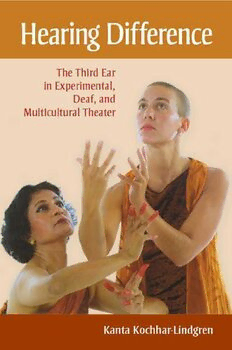
This engrossing study investigates the connections between hearing and deafness in experimental, Deaf, and multicultural theater. Author Kanta Kochhar-Lindgren focuses on how to articulate a Deaf aesthetic and how to grasp the meaning of moments of “deafness” in theater works that do not simply reinscribe a hearing bias back into one’s analysis. She employs a model using a device for cross-sensory listening across domains of sound, silence, and the moving body in performance that she calls the “third ear.”Kochhar-Lindgren then charts a genealogy of the theater of the third ear from the mid-1800s to the 1960s in examples ranging from Denis Diderot, the Symbolists, the Dadaists, Antonin Artaud, and others. She also analyzes the work of playwright Robert Wilson, the National Theatre of the Deaf, and Asian American director Ping Chong. She shows how the model of the third ear can address not only deaf performance but also multicultural performance, by analyzing the Seattle dance troupe Ragamala’s 2001 production of Transposed Heads, which melded classical South Indian use of mudras, or hand gestures, and ASL signing.The shift in attention limned in Hearing Difference leads to a different understanding of the body, intersubjectivity, communication, and cross-cultural relations, confirming it as a critically important contribution to contemporary Deaf studies.
Detailed Information
| Author: | Kanta Kochhar-Lindgren |
|---|---|
| Publication Year: | 2006 |
| ISBN: | 9781563683787 |
| Pages: | 217 |
| Language: | English |
| File Size: | 1.251 |
| Format: | |
| Price: | FREE |
Safe & Secure Download - No registration required
Why Choose PDFdrive for Your Free Hearing Difference: The Third Ear in Experimental, Deaf, and Multicultural Theater Download?
- 100% Free: No hidden fees or subscriptions required for one book every day.
- No Registration: Immediate access is available without creating accounts for one book every day.
- Safe and Secure: Clean downloads without malware or viruses
- Multiple Formats: PDF, MOBI, Mpub,... optimized for all devices
- Educational Resource: Supporting knowledge sharing and learning
Frequently Asked Questions
Is it really free to download Hearing Difference: The Third Ear in Experimental, Deaf, and Multicultural Theater PDF?
Yes, on https://PDFdrive.to you can download Hearing Difference: The Third Ear in Experimental, Deaf, and Multicultural Theater by Kanta Kochhar-Lindgren completely free. We don't require any payment, subscription, or registration to access this PDF file. For 3 books every day.
How can I read Hearing Difference: The Third Ear in Experimental, Deaf, and Multicultural Theater on my mobile device?
After downloading Hearing Difference: The Third Ear in Experimental, Deaf, and Multicultural Theater PDF, you can open it with any PDF reader app on your phone or tablet. We recommend using Adobe Acrobat Reader, Apple Books, or Google Play Books for the best reading experience.
Is this the full version of Hearing Difference: The Third Ear in Experimental, Deaf, and Multicultural Theater?
Yes, this is the complete PDF version of Hearing Difference: The Third Ear in Experimental, Deaf, and Multicultural Theater by Kanta Kochhar-Lindgren. You will be able to read the entire content as in the printed version without missing any pages.
Is it legal to download Hearing Difference: The Third Ear in Experimental, Deaf, and Multicultural Theater PDF for free?
https://PDFdrive.to provides links to free educational resources available online. We do not store any files on our servers. Please be aware of copyright laws in your country before downloading.
The materials shared are intended for research, educational, and personal use in accordance with fair use principles.

