
Download Fibre Optic Methods for Structural Health Monitoring PDF Free - Full Version
Download Fibre Optic Methods for Structural Health Monitoring by Branko Glisic, Daniele Inaudi in PDF format completely FREE. No registration required, no payment needed. Get instant access to this valuable resource on PDFdrive.to!
About Fibre Optic Methods for Structural Health Monitoring
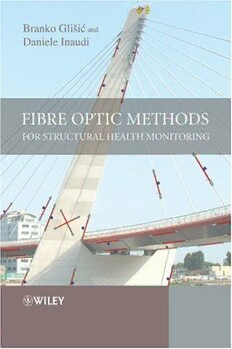
The use of fibre optic sensors in structural health monitoring has rapidly accelerated in recent years. By embedding fibre optic sensors in structures (e.g. buildings, bridges and pipelines) it is possible to obtain real time data on structural changes such as stress or strain. Engineers use monitoring data to detect deviations from a structure’s original design performance in order to optimise the operation, repair and maintenance of a structure over time.Fibre Optic Methods for Structural Health Monitoring is organised as a step-by-step guide to implementing a monitoring system and includes examples of common structures and their most-frequently monitored parameters. This book:presents a universal method for static structural health monitoring, using a technique with proven effectiveness in hundreds of applications worldwide;discusses a variety of different structures including buildings, bridges, dams, tunnels and pipelines;features case studies which describe common problems and offer solutions to those problems;provides advice on establishing mechanical parameters to monitor (including deformations, rotations and displacements) and on placing sensors to achieve monitoring objectives;identifies methods for interpreting data according to construction material and shows how to apply numerical concepts and formulae to data in order to inform decision making.Fibre Optic Methods for Structural Health Monitoring is an invaluable reference for practising engineers in the fields of civil, structural and geotechnical engineering. It will also be of interest to academics and undergraduate/graduate students studying civil and structural engineering.
Detailed Information
| Author: | Branko Glisic, Daniele Inaudi |
|---|---|
| Publication Year: | 2008 |
| ISBN: | 9780470061428 |
| Pages: | 272 |
| Language: | English |
| File Size: | 24.006 |
| Format: | |
| Price: | FREE |
Safe & Secure Download - No registration required
Why Choose PDFdrive for Your Free Fibre Optic Methods for Structural Health Monitoring Download?
- 100% Free: No hidden fees or subscriptions required for one book every day.
- No Registration: Immediate access is available without creating accounts for one book every day.
- Safe and Secure: Clean downloads without malware or viruses
- Multiple Formats: PDF, MOBI, Mpub,... optimized for all devices
- Educational Resource: Supporting knowledge sharing and learning
Frequently Asked Questions
Is it really free to download Fibre Optic Methods for Structural Health Monitoring PDF?
Yes, on https://PDFdrive.to you can download Fibre Optic Methods for Structural Health Monitoring by Branko Glisic, Daniele Inaudi completely free. We don't require any payment, subscription, or registration to access this PDF file. For 3 books every day.
How can I read Fibre Optic Methods for Structural Health Monitoring on my mobile device?
After downloading Fibre Optic Methods for Structural Health Monitoring PDF, you can open it with any PDF reader app on your phone or tablet. We recommend using Adobe Acrobat Reader, Apple Books, or Google Play Books for the best reading experience.
Is this the full version of Fibre Optic Methods for Structural Health Monitoring?
Yes, this is the complete PDF version of Fibre Optic Methods for Structural Health Monitoring by Branko Glisic, Daniele Inaudi. You will be able to read the entire content as in the printed version without missing any pages.
Is it legal to download Fibre Optic Methods for Structural Health Monitoring PDF for free?
https://PDFdrive.to provides links to free educational resources available online. We do not store any files on our servers. Please be aware of copyright laws in your country before downloading.
The materials shared are intended for research, educational, and personal use in accordance with fair use principles.

